






Are Your Smoke Alarms Up to Date? When to Replace Them
Are your smoke alarms up to date? Here’s how to tell
By Vinnie Camenzuli, Founder & CEO · Taddeo Electrical Contractors, Inc., Lic. EC13007179 · November 17, 2026
If your smoke alarms are more than 10 years old, they’re due for replacement, even if they still beep when you press the test button. The National Fire Protection Association (NFPA) recommends replacing every smoke alarm at 10 years and testing them monthly. Here’s how to check yours in about five minutes, and what Florida homeowners should know before replacing them.
Check the date on the back
Every smoke alarm has a manufacture date printed on the back. Replace it 10 years from that date, because the sensors inside wear out over time. If you can’t find a date at all, assume it’s time for a new one.
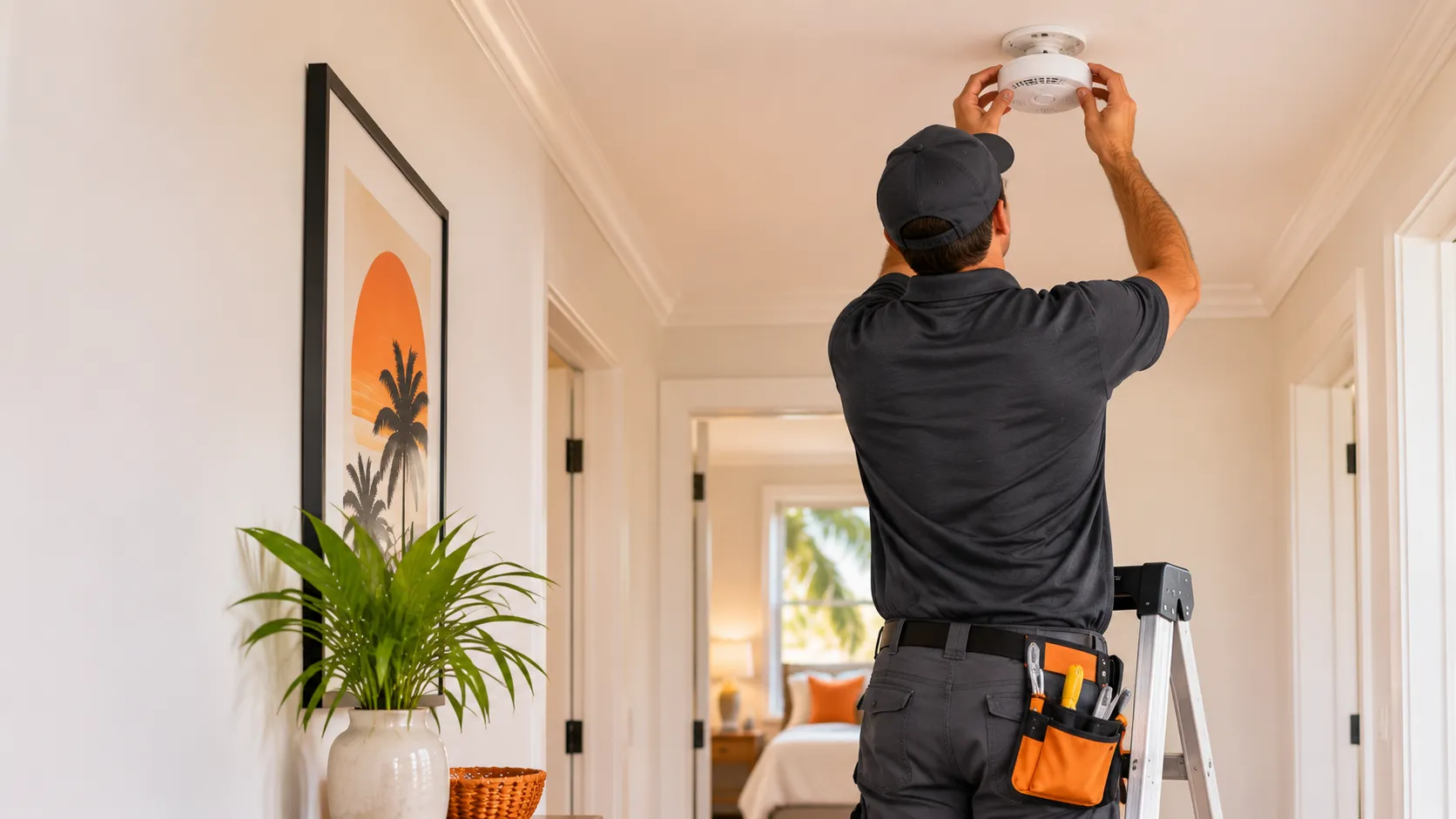
On a battery-only alarm, you can usually twist it off its ceiling base to read the label. If yours is hardwired, it’s connected to your home’s wiring, so let a licensed electrician check and replace it.
Test every alarm once a month
Press and hold the test button until it sounds. A loud, clear alarm means it’s working. If the sound is weak, muffled, or nothing happens, replace the alarm.
It also helps to know what the sounds mean:
- Steady chirp on an alarm with a replaceable battery: Replace the battery.
- Chirp on a sealed 10-year alarm: The alarm itself has reached the end of its life. Replace the whole unit.
- Frequent false alarms: The alarm may be dusty, too close to a kitchen or bathroom, or simply worn out.
Where smoke alarms belong
The NFPA recommends smoke alarms:
- Inside every bedroom
- Outside each separate sleeping area
- On every level of the home
Mount them high on the ceiling or wall, at least 10 feet from the stove, and away from windows, doors, and air vents. That last one matters in Florida, where ceiling AC vents can blow smoke away from an alarm before it has a chance to sound.
Battery, sealed, or hardwired: what’s the difference?
For the best protection, the NFPA recommends interconnected alarms, so when one sounds, they all sound. That way, a fire in the garage wakes up everyone in the back bedrooms.
The NFPA also recommends using both types of smoke sensors, ionization and photoelectric, or a combination alarm that includes both. Ionization alarms tend to respond faster to flaming fires, and photoelectric alarms tend to respond faster to smoldering fires.
What Florida homeowners should know
- Florida law has a battery rule. Under Florida Statute 553.883, when a battery-powered smoke alarm is installed or replaced as part of certain renovations (a “level 1 alteration” under the Florida Building Code), it must use a sealed battery rated for at least 10 years. A few types, like smoke and carbon monoxide combo alarms, are exempt. We’ll help you sort out what applies to your home.
- Older homes often have fewer alarms. Many homes in Pasco, Hernando, and Citrus counties were built before today’s recommendations, so they may only have one or two alarms in a hallway.
- Storm season means outages. A hardwired alarm with a fresh backup battery keeps protecting your family when the power goes out. If a storm knocks out more than your power, our emergency services and power restoration team can help.
- Humidity and steam cause false alarms. An alarm too close to a bathroom can go off after every hot shower. Moving it is a better fix than taking the battery out.
Watt Wants You to Know: The holidays bring more cooking, candles, and space heaters, which makes now a great time to test every smoke alarm and check the dates on the back. It takes five minutes. Then set a monthly reminder on your phone so testing becomes a habit.
What to do next
- Count your alarms. Is there one in every bedroom, outside each sleeping area, and on every level?
- Check the dates. Anything 10 years old or older, or missing a date, gets replaced.
- Test them. Press the button on each one, then put a monthly reminder on your phone.
- Call a pro for hardwired or interconnected alarms. Replacing hardwired alarms, or adding interconnected ones, is work for a licensed electrician.
At Taddeo, our smoke alarm installation service covers it all: replacing old units, adding alarms where they’re missing, and setting up interconnected systems so the whole house hears the warning. We’ll explain what you have, what’s recommended, and give you upfront pricing before we start.
Ready to get your alarms up to date? Call us Taddeo, not tomorrow! Call (352) 556-5276 or schedule your free estimate. We serve homes across Citrus, Hernando, Pasco, North Hillsborough, and North Pinellas counties.
FAQ
How often should smoke alarms be replaced? Every 10 years from the manufacture date printed on the back, according to the NFPA. That includes hardwired alarms and alarms with sealed 10-year batteries.
Why is my smoke alarm chirping? On an alarm with a replaceable battery, a chirp usually means the battery is low. On a sealed 10-year alarm, it means the alarm has reached the end of its life and needs to be replaced.
Do smoke alarms need to be interconnected? The NFPA recommends it for the best protection, and new homes are built with interconnected alarms. In an existing home, a licensed electrician can tell you what’s possible with your current setup.
Can I replace a hardwired smoke alarm myself? Hardwired alarms are connected to your home’s electrical system, so we recommend having a licensed electrician replace them. It’s quick, and you’ll know they’re installed correctly and working together.
About the Author
Vinnie Camenzuli, Founder & CEO, Taddeo Electrical Contractors, Inc.
Vinnie founded Taddeo Electrical Contractors in 2010 and named it in honor of his father, Giuda Taddeo Camenzuli. “Taddeo” means “beloved” in Maltese. His parents immigrated from Malta in the 1940s, and his father taught him the value of hard work, discipline, and doing things right the first time. Vinnie started his career in the commercial sector, learning from seasoned mentors, before building Taddeo on a foundation of integrity and excellence. Today, Taddeo serves homes and businesses across West Central Florida under license EC13007179. Off the job, Vinnie loves camping, reading, and time with his wife and grandchildren, and he holds a black belt in Goju-Ryu karate.