





What Is 3-Phase Power Used For? Single-Phase vs Three-Phase, Explained
by Vinnie Camenzuli, License No. EC13007179 – updated 24 September 2026
Quick answer: three-phase power delivers electricity in three overlapping streams instead of one, which makes it smoother and more efficient for running heavy equipment. It is the workhorse behind most commercial and industrial buildings. Homes, on the other hand, almost always run on single-phase power, and that is perfectly fine for everything a house needs.
Let us break down the difference without the engineering headache.
Single-Phase vs Three-Phase, in Plain English
Picture a rowboat. Single-phase power is one rower: strong pulls, but with a tiny pause between each stroke. That is totally fine for lights, outlets, and household appliances, which is why homes use it.
Three-phase power is three rowers, each pulling at a staggered moment so the boat is always being pushed forward. The result is steadier, more efficient power with no real gaps. That smoothness is exactly what big motors and heavy equipment love, because it lets them run cooler, stronger, and longer.
Where 3-Phase Power Is Actually Used
You will find three-phase power almost anywhere serious equipment is running:
Commercial and industrial buildings, warehouses, and shops
Large HVAC systems and commercial refrigeration
Big motors, pumps, compressors, elevators, and machinery
Restaurants and commercial kitchens with heavy equipment
Commercial EV fast-charging stations
Farms and agricultural operations with large pumps or equipment
Commercial and industrial buildings, warehouses, and shops
Large HVAC systems and commercial refrigeration
Big motors, pumps, compressors, elevators, and machinery
Restaurants and commercial kitchens with heavy equipment
Commercial EV fast-charging stations
Farms and agricultural operations with large pumps or equipment
The common thread: continuous, demanding loads that single-phase would struggle to run efficiently.

Does My Home Have 3-Phase Power?
Almost certainly not, and that is by design. Homes in the United States run on single-phase service (technically a split-phase setup that also gives you the 240 volts needed for things like your dryer, range, and EV charger). For everything a house does, single-phase is the right tool. If you are adding a big load like an EV charger, that runs fine on your home’s existing service, no three-phase required.
The main time a homeowner bumps into three-phase is a rare hobby or shop scenario, like a piece of woodworking or metalworking equipment that was built for a commercial setting. In those cases there are workarounds, and it is a conversation to have with an electrician.
When a Business Needs 3-Phase
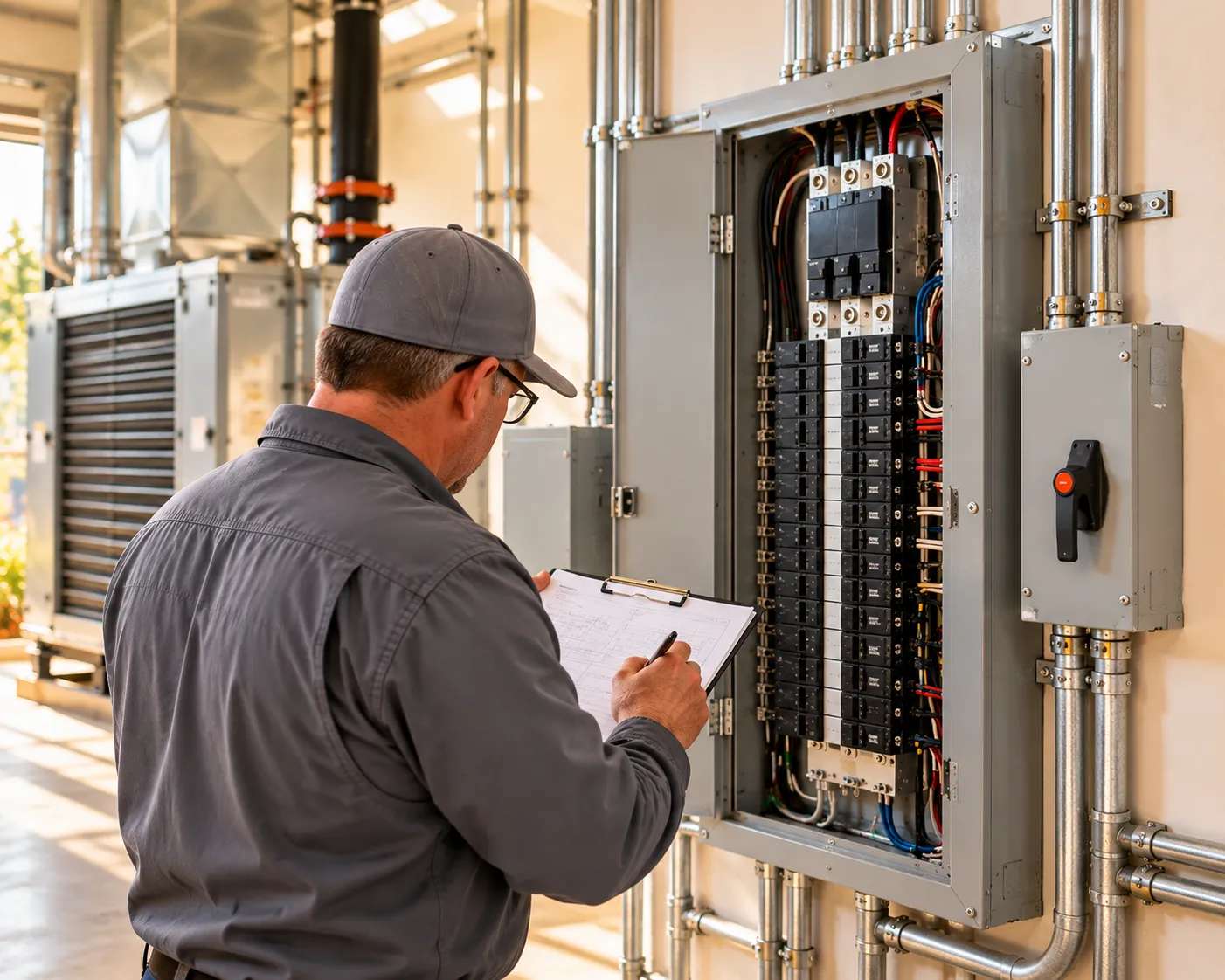
For a business, three-phase is often the difference between equipment that runs well and equipment that struggles. If you are opening, expanding, or outfitting a commercial space with heavy HVAC, refrigeration, motors, or machinery, three-phase service is frequently the right foundation. Whether a given building already has it, and what it takes to bring it in, depends on the property and the utility. That is exactly the kind of thing our commercial team sorts out.
What to Do Next
If you run a business and you are not sure whether your space has (or needs) three-phase power, that is a great question to bring to a licensed commercial electrician. We will look at your equipment, your building, and your plans, and give you a straight answer about what your operation actually needs. For more on the U.S. power grid and how electricity is delivered, the U.S. Department of Energy (energy.gov) is a solid, authoritative resource.
WATT WANTS YOU TO KNOW
More phases is not “better” for a home, it is just different. Trying to force three-phase into a house that does not need it adds cost and complexity for no real benefit. The right answer is always matching the power to the equipment. For a home, single-phase wins. For heavy commercial gear, three-phase shines.
WATT WANTS YOU TO KNOW
More phases is not “better” for a home, it is just different. Trying to force three-phase into a house that does not need it adds cost and complexity for no real benefit. The right answer is always matching the power to the equipment. For a home, single-phase wins. For heavy commercial gear, three-phase shines.
Frequently Asked Questions
What is the main benefit of 3-phase power? It delivers smoother, more efficient power for heavy, continuous loads, so big motors and equipment run cooler and stronger than they would on single-phase.
Is 3-phase power cheaper to run? For the right heavy loads it can be more efficient, which can reduce wear and energy waste on large equipment. For a typical home, it offers no real advantage.
Can 3-phase be added to a commercial building? Often yes, depending on the building and the local utility. A licensed commercial electrician can assess what it would take.
Do you handle commercial electrical work? Yes. Alongside our residential services, we handle commercial repairs, inspections, lighting, and build-outs across West Central Florida.
Do you serve my area? We cover Citrus, Hernando, Pasco, North Hillsborough, and North Pinellas counties, and we are expanding into Clearwater.
Have a Commercial Power Question?
If you are weighing three-phase for a business or you just want to know what your building has, let us help you figure it out. No pressure, no jargon, just honest guidance from your licensed local team. Power you can trust. Service you’ll recommend.
Call us Taddeo, not tomorrow! (352) 556-5276, or request your free estimate online.
Taddeo Electrical Contractors, Inc. Family-run and licensed (EC13007179). Serving West Central Florida since 2010.
About the Author
Vinnie Camenzuli, Founder & CEO of Taddeo Electric
Vinnie Camenzuli founded Taddeo Electrical Contractors in 2010, naming the company in honor of his father, Giuda Taddeo Camenzuli. “Taddeo” means “beloved” in Maltese, a nod to the family that shaped him. His parents immigrated from Malta in the 1940s and raised him on hard work, discipline, and doing the job right the first time. After getting his start in the commercial sector and learning from seasoned mentors, Vinnie built Taddeo Electric on a foundation of integrity and excellence, earning a reputation for reliable, high-quality electrical work across West Central Florida.