






How Many Amps Does a Home EV Charger Need? A West Central Florida Guide
So there’s a shiny new EV in the driveway (or one on the way), and now you’re staring at your garage wall wondering how to actually keep the thing charged. First off, welcome to the club. More West-Central-Florida neighbors are charging at home every single month.
Here’s the question everyone asks us: how many amps do I actually need? Let’s get you amped up on the answer. No engineering degree required.
The Quick Answer
Most home charging comes down to two levels:
- Level 1 plugs into a regular 120-volt household outlet and pulls roughly 12–16 amps. It’s the slow-and-steady option — think a few miles of range per hour.
- Level 2 uses a 240-volt circuit (the same family of power as your dryer or range) and typically runs 32, 40, or 48 amps. This is what most people mean when they say “home charger,” and it’s dramatically faster.
For the majority of Florida homeowners who want to plug in overnight and wake up full, a 40-amp Level 2 charger is the sweet spot. But “how many amps you need” depends on a couple of things — let’s break it down.
Level 1 vs. Level 2 — What’s the Difference?
Level 1 is the ultimate no-fuss option: plug the included cord into a standard outlet and go. It adds somewhere around 3–5 miles of range per hour. If you drive a plug-in hybrid or you’re a low-mileage driver, that might genuinely be all you need.
Level 2 is the upgrade most EV owners fall in love with. On a dedicated 240-volt circuit, it can add roughly 20–40+ miles of range per hour depending on the amperage and your vehicle — enough to top off even a big battery overnight. That speed is why it’s the go-to for most households.
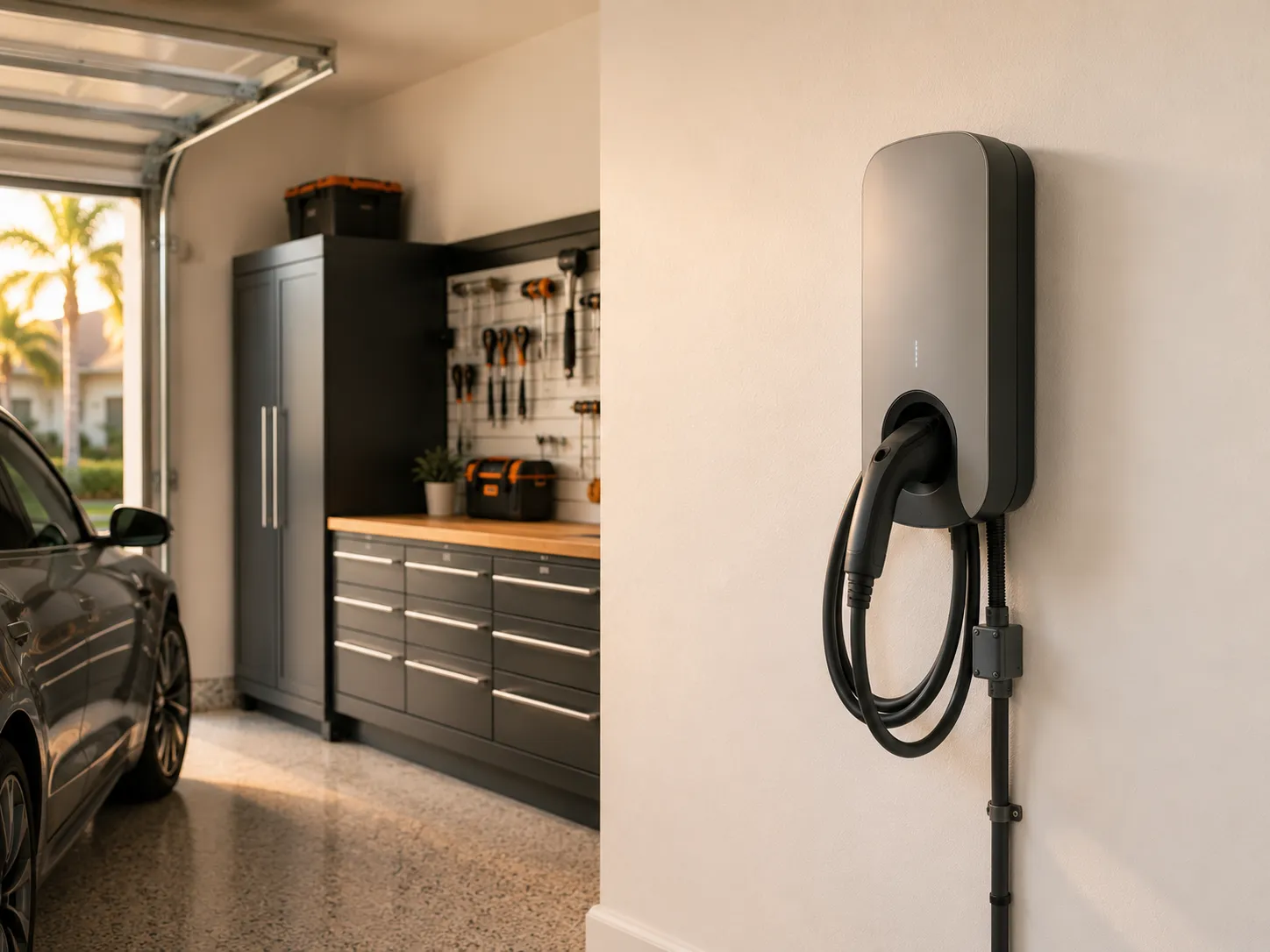
How Many Amps Does Your Charger Need?
Here’s the part that trips people up (pun absolutely intended). An EV charger is what electricians call a continuous load — it can pull power steadily for hours. Because of that, the charger is only allowed to draw up to 80% of the circuit it’s on.
In plain English, that means:
- A 32-amp charger needs a 40-amp circuit
- A 40-amp charger needs a 50-amp circuit
- A 48-amp charger needs a 60-amp circuit
So the amperage you pick isn’t just about the charger on the wall — it’s about the whole circuit feeding it. The faster you want to charge, the more amps you need, and the more that circuit asks of your home’s electrical system. Which brings us to the thing everyone forgets…
The Part People Forget: Does Your Panel Have Room?
Your charger can only pull what your electrical panel can spare. A 240-volt, 50-amp circuit is a serious, sustained load — and if your panel is older, smaller (hello, 100-amp homes), or already working hard for your AC, it might not have the capacity to add one safely.
That doesn’t automatically mean a big project. Sometimes there’s plenty of room. Sometimes a panel upgrade is the right move first (we wrote a whole guide on the signs your panel may need an upgrade). And sometimes a smart load-management device lets you add a charger without upsizing the panel at all. The only way to know for sure is a quick look and a load calculation — which is exactly what a free estimate is for.
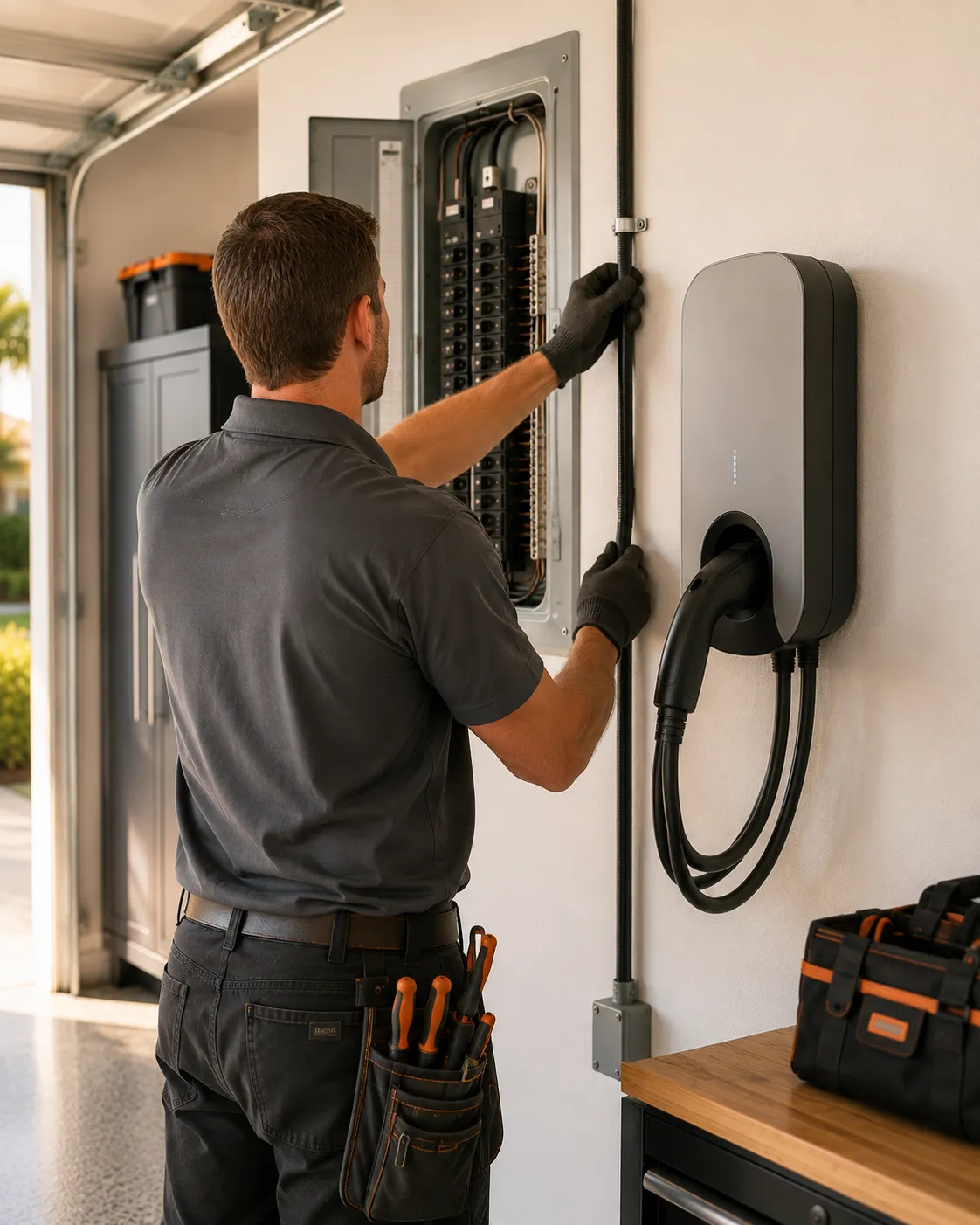
Why an EV Charger Is a Licensed-Electrician Job
We love a good DIY project as much as anyone — but a 240-volt, high-amperage circuit that runs for hours at a time is not the place to freelance. It needs a dedicated circuit sized correctly, installed to code, permitted, and inspected. Done right, it’s rock-solid and safe. Done wrong, it’s a fire risk hiding in your garage.
That’s where we come in. Taddeo Electric is family-run and licensed (Lic. EC13007179), with a field team carrying 100+ years of combined experience. We’ll size the circuit to your charger and your home, pull the permit, handle the inspection, keep the install clean — and then show you how the whole setup works before we head out. We install it and teach you how to use it. That’s kind of our thing.
WATT WANTS YOU TO KNOW Buying a charger before you call an electrician? Smart move to check one number first: the amperage of the charger you’re eyeing. A 48-amp unit charges fast but needs a beefy 60-amp circuit and plenty of panel room, while a 40-amp unit is plenty for most homes and asks a little less of your system. Not sure which fits your house? That’s a two-minute conversation with us.
Frequently Asked Questions
Can’t I just plug into a regular outlet? For a plug-in hybrid or a light-mileage driver, Level 1 into a standard outlet can genuinely be enough. If you drive more, or you’re tired of watching the battery crawl, Level 2 is the upgrade that makes home charging feel effortless.
What size breaker does a home EV charger need? It depends on the charger. Because a charger draws continuously, the circuit is sized about 25% larger than the charger’s rating — commonly a 40- or 50-amp circuit for popular home units. We’ll size yours correctly as part of the install.
Do I need a panel upgrade to add an EV charger? Sometimes yes, sometimes no. It comes down to your panel’s size and how much of it is already spoken for. A quick load calculation during your free estimate gives you a real answer — and there are often options (like load management) that avoid a full upgrade.
How long does installation take? Many home charger installs are a same-day job, but it depends on your panel, the charger location, and the wiring run. We’ll confirm the timeline upfront at your estimate — no surprises.
Do you install EV chargers in my area? We cover Citrus, Hernando, Pasco, North Hillsborough, and North Pinellas counties — and we’re expanding into Clearwater. If you’re in West Central Florida, we’ve likely got a neighbor near you.
Ready to Get Charged Up at Home?
Whether you already know exactly which charger you want or you have no idea where to start, we’ll help you make the right call for your home. Sized right, installed safe, and explained in plain English. Power you can trust. Service you’ll recommend.
Call us Taddeo, not tomorrow! ð (352) 556-5276 — or request your free estimate online and we’ll get you on the schedule.
Taddeo Electrical Contractors, Inc. · Family-run and licensed (EC13007179) · Serving West Central Florida since 2010.